Table of Contents
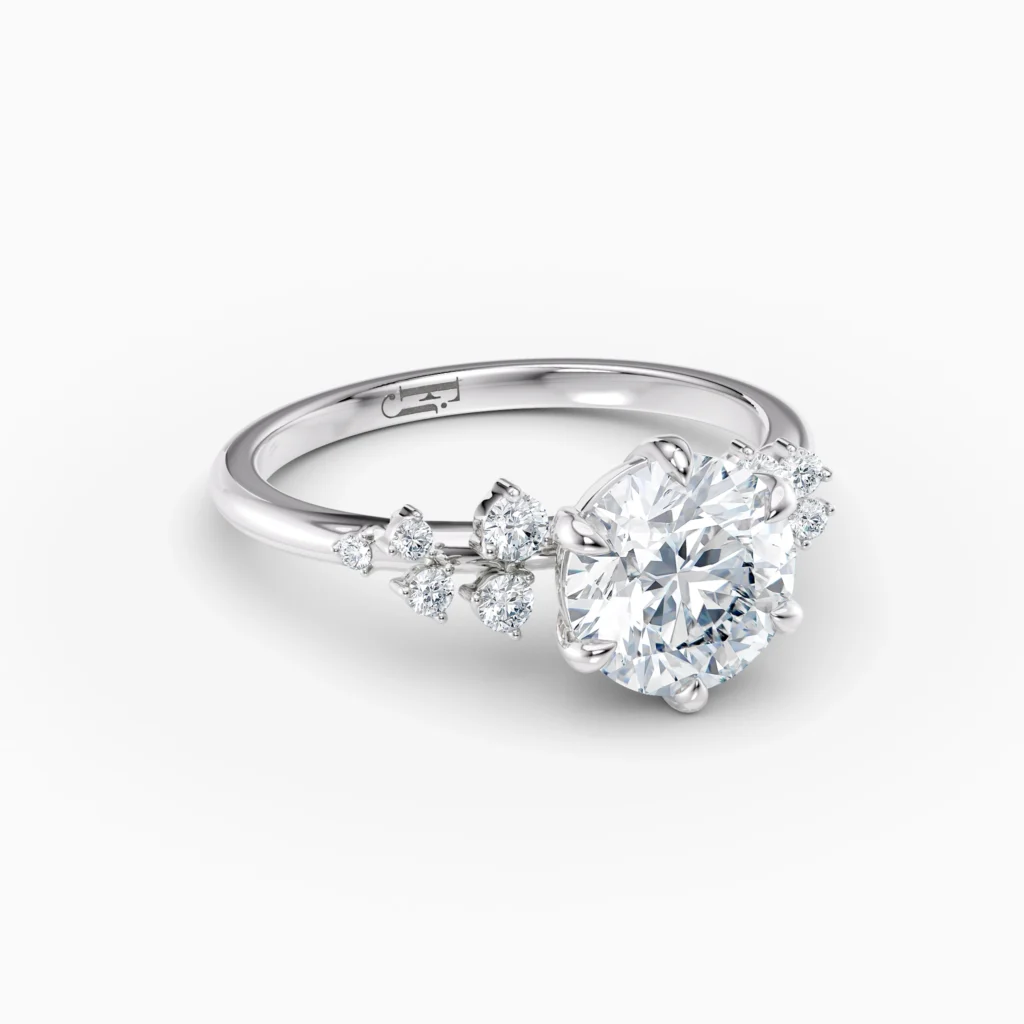
Short answer: VS1 and VS2 are neighbors on the clarity scale and both are eye-clean in almost every round diamond. A VS2 costs less than a VS1 of the same size, color and cut, and in most rings nobody will ever see why. The exceptions are step cuts, very large stones, and the occasional VS2 with a dark inclusion sitting dead center. Those are the cases where I steer clients to VS1.
I am Shimon Himovich. I grade, buy and set diamonds in our Scottsdale studio, and this is the comparison I walk couples through at the table.
What VS1 and VS2 Mean
Clarity describes the inclusions inside a diamond and the blemishes on its surface. GIA grades it on an eleven-step scale:
- Flawless (FL) and Internally Flawless (IF)
- Very, Very Slightly Included: VVS1 and VVS2
- Very Slightly Included: VS1 and VS2
- Slightly Included: SI1 and SI2
- Included: I1, I2 and I3
VS means the inclusions are minor and take effort to find under 10x magnification. VS1 inclusions are harder to find than VS2 inclusions. Neither grade should show anything to the naked eye in a well-cut round brilliant.
The grade tells you how hard the inclusions are to find under a loupe. It does not tell you what they look like, where they sit, or whether you will ever notice them. That is why two VS2 stones with identical reports can look different, and why I look at the stone before I look at the paper.
Which Inclusions Land in VS1 vs VS2
The grader is weighing size, number, position, color and relief of the inclusions together. The same type of inclusion can produce either grade, but these are the usual suspects:
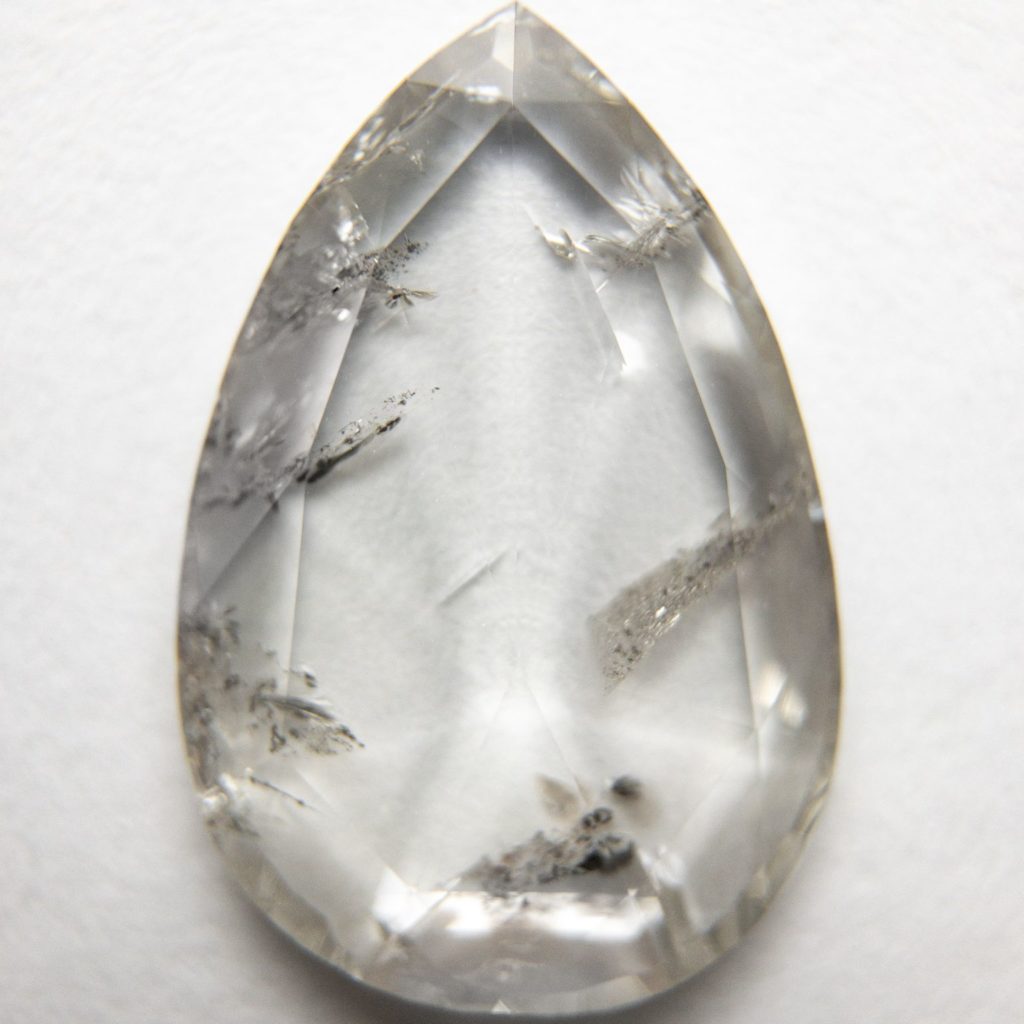
- Crystal: a small mineral trapped inside the diamond. Colorless crystals often grade VS1. Dark ones, or several together, push toward VS2.
- Needle: a long, thin crystal. Usually VS1 on its own.
- Feather: a small internal fracture. Position decides a lot: near the girdle it hides, under the table it does not.
- Cloud: a cluster of pinpoints. A small cloud is harmless. A large one can make a stone look slightly milky even at VS2, which is why I check for it.
- Knot: a crystal that reaches the surface. Graded lower because it can be felt and can affect durability.
- Indented natural: a bit of the original rough skin left at the girdle. Usually VS1 and invisible once set.

Can You See the Difference?
In a round brilliant of about two carats or less, almost never. The facets scatter light so efficiently that a VS2 inclusion disappears. Where you can see a difference:
- Step cuts. Emerald and Asscher cuts have long, open facets that act like windows. A VS2 inclusion under the table can be visible in these shapes, so I usually recommend VS1 for them.
- Large stones. Above two to three carats, the facets are big enough that a VS2 feather under the table can catch the eye in the right light.
- Dark, centered inclusions. A black crystal under the table is visible sooner than a white feather near the edge, whatever the grade says.
In the studio we look at the GIA plot together, then put the stone under the loupe and tilt it. If you cannot find the inclusion with a loupe and a hint, you will never find it on your hand.
Is a VS Diamond Worth It?
For an engagement ring, VS is the range where you stop paying for clarity you cannot see. VVS and Flawless grades cost more for a difference that only a microscope can show. SI grades save more, but need to be checked stone by stone because some SI1 stones are eye-clean and some are not. VS1 and VS2 are the safe middle: eye-clean as a rule, with the money left over going into cut, color or size.
Not sure which way to go? Come in for a no-strings look at both grades side by side. Book a private consultation in our Scottsdale studio and bring the question.

VS1 vs VS2: Price
With the same carat weight, color, cut and shape, a VS1 costs more than a VS2. How much more depends on the size and on how scarce that combination is, and the gap is far smaller than the gap between natural and lab-grown. These are real stones from our current inventory in Scottsdale, so you can see the scale of each difference:
| Stone (October 2026) | Clarity | Origin | Price |
|---|---|---|---|
| Emerald cut, 2.51 ct, E color | VS1 | Natural, GIA | $37,951 |
| Emerald cut, 2.54 ct, E color | VS1 | Lab-grown, GIA | $2,548 |
| Round, 2.07 ct, E color | VS1 | Lab-grown, GIA | $2,549 |
| Radiant, 3.50 ct, E color | VS2 | Lab-grown, GIA | $5,299 |
| Round, 0.80 ct, E color | VVS2 | Natural, GIA | $3,974 |
Two things the table shows. First, origin moves the price by an order of magnitude; clarity grade moves it by a step. Second, at a given budget, dropping from VS1 to VS2 usually buys you a better cut or a bigger stone, and both of those are visible across a room. Clarity between VS1 and VS2 is not. Current stones and prices are on our diamonds page.
When I Recommend VS2, and When I Do Not
I recommend VS2 when:
- The stone is a round brilliant, oval, cushion, pear or marquise of about two carats or less. The faceting hides VS2 inclusions completely.
- The budget is fixed and the difference would buy a better cut grade or more color. Cut is what makes a diamond look alive; clarity at this level does not.
- The GIA plot shows white, off-center inclusions, or a single feather near the girdle where a prong will sit.
I recommend VS1 when:
- The shape is an emerald or Asscher cut. Step cuts show what brilliant cuts hide.
- The stone is large, roughly two and a half carats and up, where the table is wide enough for a VS2 inclusion to catch the light.
- The particular VS2 in front of us has a dark crystal or a cloud under the table. Then it is not a VS2 I would sell you, and a clean VS1 is the better stone.
How to Choose Between a VS1 and a VS2
Decide shape and size first, then cut and color, and only then clarity. Read the plot on the GIA report: where the inclusions sit and what type they are matters more than the letter. Then look at the actual stone under a loupe, tilted, in daylight. If it is eye-clean on your hand, the lower grade is the better buy. In our studio you see both grades side by side on the same tray, which settles it faster than any article.
FAQ
VS1 and VS2 are the two grades in GIA’s Very Slightly Included range. Their inclusions are minor and take effort to find under 10x magnification. VS1 inclusions are harder to find than VS2 inclusions, and neither grade normally shows anything to the naked eye.
In a round brilliant and most fancy brilliant shapes, yes, almost always. Step cuts such as emerald and Asscher, very large stones, and VS2 stones with a dark inclusion under the table are the exceptions, and those should be checked in person.
With everything else equal, a VS1 is a step more expensive than a VS2. The gap varies with size and color, and it is far smaller than the gap between a natural and a lab-grown stone of the same grade. The exact difference for the stones you are considering is a two-minute conversation in the studio.
For rounds and most fancy shapes under about two carats, a VS2 is usually the smarter buy and the savings go into cut or size. For emerald and Asscher cuts, or for very large stones, a VS1 is the safer choice.
Read the plot on the GIA report for the type and position of the inclusions, then look at the stone under a loupe and tilted in daylight. If you cannot find the inclusion with help, choose the VS2 and spend the difference on cut.
Want to see a VS1 and a VS2 side by side? Book a no-strings visit to our Scottsdale studio near Fashion Square. We put both grades on the tray, under the loupe and on your hand, and you decide with your own eyes. Call (480) 771-8833 or choose a time below.