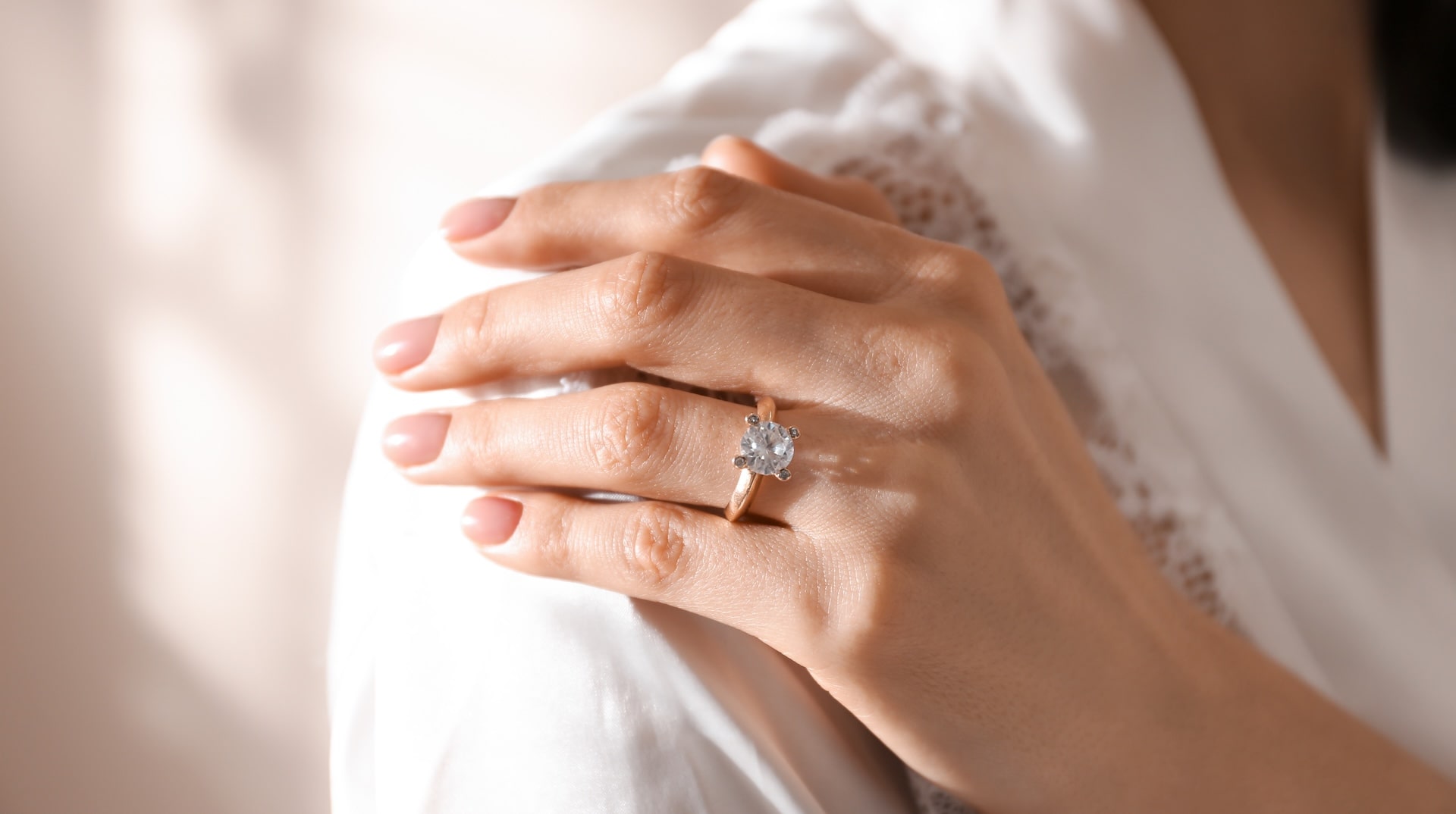


Understanding Prong Settings and Tiffany Settings: The Basics
When shopping for engagement rings, you’ll often encounter terms like “Tiffany setting” and “prong setting.” While these phrases might seem interchangeable, understanding the distinction between them is crucial for making an informed decision about your perfect engagement ring.
The relationship between these two terms is actually hierarchical – the Tiffany setting is a specific type of prong setting, but with distinctive characteristics that set it apart from standard prong settings. Let’s explore these differences in detail.
What is a Prong Setting?
A prong setting, also known as a claw setting, is one of the most popular engagement ring mounting styles. It features metal projections (prongs) that extend from the ring’s band to hold the diamond or gemstone securely in place. These metal claws grip the stone like tiny fingers, typically positioned at equal distances around the gemstone.
Prong settings come in various configurations, with the most common being four-prong and six-prong designs. The four-prong setting uses four metal claws to secure the stone, while a six-prong setting, as the name suggests, employs six prongs for additional security.
The primary purpose of a prong setting is to hold the center stone securely while exposing as much of it as possible to light. This maximizes the diamond’s brilliance by allowing light to enter and reflect through the stone from multiple angles.
What is the Tiffany® Setting?
The Tiffany® Setting is not just any prong setting – it’s a specific, iconic design created by Tiffany & Co. in 1886. What makes it special is its distinctive six-prong arrangement that elevates the diamond above the band, allowing maximum light exposure and enhancing the stone’s brilliance.
When Charles Lewis Tiffany introduced this design, it revolutionized engagement ring aesthetics. Before the Tiffany Setting, diamonds were typically set low in bezels that covered much of the stone. The innovative raised six-prong design showcased the diamond as never before, highlighting its fire and brilliance.
It’s important to note that the term “Tiffany Setting” is a registered trademark of Tiffany & Co. While many jewelers create six-prong solitaire settings inspired by this design, only those made by Tiffany & Co. can be legitimately called “Tiffany Settings.” Other jewelers may refer to similar designs as “Tiffany-style” or “six-prong solitaire” settings.
Key Differences Between Tiffany Setting and Standard Prong Settings
While both share the fundamental concept of using prongs to secure a gemstone, several key differences distinguish a genuine Tiffany Setting from standard prong settings.
Design and Appearance Differences
The most noticeable difference between a Tiffany Setting and standard prong settings lies in their visual presentation. The Tiffany Setting features a very specific architectural structure designed to maximize the diamond’s presence and brilliance:
The Tiffany Setting raises the diamond higher above the band than most standard prong settings. This elevation creates a more dramatic, floating appearance and allows more light to pass through the diamond from all angles.
The prongs in a Tiffany Setting are positioned in a very specific pattern and are more slender and delicate-looking than those in many standard settings. This precision arrangement creates a more refined look while still providing excellent security for the stone.
The band of a classic Tiffany Setting is typically knife-edge (tapers to a narrow point at the top), which further enhances the diamond’s prominence. Many standard prong settings feature different band styles, from rounded to flat or more ornate designs.
In contrast, standard prong settings vary widely in their design. While some may feature six prongs like the Tiffany Setting, others use four prongs, which expose more of the diamond but offer slightly less security. The height of the stone, the thickness and shape of the prongs, and the overall proportions can all vary significantly in standard prong settings.

Structural and Technical Differences
Beyond aesthetics, there are technical differences that affect both security and performance:
The engineering of a Tiffany Setting is precisely calibrated to balance security with maximum light exposure. The six prongs are positioned to hold the diamond securely while minimizing metal contact with the stone.
In standard four-prong settings, the prongs are typically placed at the four corners of the diamond (if it’s a square or princess cut) or at the cardinal points (for round diamonds). This arrangement exposes more of the diamond’s surface but may offer less security than a six-prong design.
The basket (the metal structure beneath the diamond that connects to the prongs) in a Tiffany Setting is designed to complement the overall aesthetic while providing structural integrity. In standard prong settings, basket designs vary widely, from simple to elaborate.
| Feature | Tiffany® Setting | Standard Prong Setting |
|---|---|---|
| Number of Prongs | Always six | Typically four or six, but can vary |
| Height of Diamond | Significantly raised | Variable, often lower profile |
| Band Design | Classic knife-edge | Various styles available |
| Light Exposure | Maximum exposure | Good to excellent, varies by design |
| Security | High (six-prong design) | Varies (four-prong less secure than six) |
| Prong Style | Slender, elegant, uniform | Varies widely |
Pros and Cons: Tiffany Setting vs. Various Prong Settings
When deciding between a Tiffany Setting and other prong settings for your diamond engagement ring, it’s important to consider the practical advantages and disadvantages of each.
Advantages and Disadvantages of the Tiffany Setting
The Tiffany Setting offers several distinct advantages:
- Enhanced brilliance: The elevated position allows maximum light to enter the diamond from all angles, creating exceptional sparkle.
- Iconic design: The Tiffany Setting is instantly recognizable and carries prestige as the original raised prong setting.
- Superior security: The six-prong arrangement provides excellent protection against stone loss.
- Timeless elegance: This classic design has remained fashionable for over 135 years.
However, there are also some potential drawbacks to consider:
The higher profile may make the ring more prone to catching on clothing or other items. The raised setting might not be ideal for someone with a very active lifestyle or who works with their hands.
Authentic Tiffany Settings come at a premium price, reflecting both the brand prestige and the craftsmanship involved. The higher profile might expose the diamond to more potential impacts or bumps.
Advantages and Disadvantages of Standard Prong Settings
Standard prong settings, particularly four-prong variants, offer their own set of benefits:
- More diamond visibility: Four-prong settings expose more of the diamond’s surface area.
- Design versatility: Standard prong settings come in countless variations to suit different styles.
- Cost-effectiveness: They are generally more affordable than branded designs.
- Adaptability: Prong settings can be customized for nearly any diamond shape or gemstone.
The disadvantages of standard prong settings include:
Four-prong settings, while maximizing diamond visibility, offer less security than six-prong designs. The prongs in standard settings may be thicker or more noticeable than those in a Tiffany Setting.
Some standard prong settings might not elevate the diamond as much, potentially reducing light reflection and brilliance. Without the careful engineering of a premium design like the Tiffany Setting, some standard settings might not distribute pressure as evenly around the diamond.
Durability and Maintenance Comparison
Both Tiffany Settings and standard prong settings require regular maintenance to ensure their longevity, but there are some differences in their durability and care requirements.
How to Care for Your Tiffany Setting
The raised profile of a Tiffany Setting means it might be more vulnerable to bumps and knocks. To maintain its beauty and structural integrity:
Have your ring checked professionally every six months to ensure the prongs remain tight and secure. The slender, elegant prongs that are characteristic of the Tiffany Setting may wear down over time and might require retipping (reinforcing the tips of worn prongs) after years of wear.
Remove your ring during activities that could potentially damage it, such as gardening, sports, or heavy cleaning. Store your Tiffany Setting separately from other jewelry to prevent scratching or damage.
Clean your ring regularly with mild soap and warm water using a soft brush to maintain its brilliance. Remember that the higher setting might collect more debris underneath the diamond.
Caring for Standard Prong Settings
Standard prong settings also require careful maintenance, with some specific considerations:
Four-prong settings need particularly vigilant checking, as the loss of even one prong could put the stone at risk. Different prong styles may have different durability profiles – rounded or button-style prongs tend to be more durable than V-shaped or claw prongs.
Like Tiffany Settings, standard prong settings should be professionally inspected at least twice a year. The more active your lifestyle, the more frequently you should have your prongs checked.
If you opt for a lower-profile standard prong setting, it might be less prone to catching on fabric but could potentially collect more soap residue or lotion underneath, requiring more thorough cleaning.

Cost Considerations: Tiffany vs. Standard Prong Settings
Price is often a significant factor when choosing between a Tiffany Setting and a standard prong setting.
An authentic Tiffany® Setting comes with substantial brand premium. You’re paying not just for the design and craftsmanship, but for the prestige and heritage of the Tiffany & Co. name. Depending on the diamond quality and ring specifications, an authentic Tiffany engagement ring can cost significantly more than a comparable ring with a similar-looking setting from another jeweler.
Standard prong settings vary widely in price depending on several factors: the metal used, the craftsmanship quality, the complexity of the design, and the jeweler’s markup. A basic four-prong solitaire setting might be one of the most affordable engagement ring options available, while more elaborate custom prong settings with additional details can command higher prices.
When considering cost, it’s important to evaluate what you’re paying for. With a Tiffany Setting, a significant portion of the price reflects the brand name and the assurance of a certain level of quality and design authenticity. With custom jewelry featuring standard prong settings, your money might go further in terms of diamond size or quality, or you might be able to incorporate additional design elements while staying within your budget.
Which Setting is Right for You? Personalized Recommendations
Choosing between a Tiffany Setting and other prong settings depends on your personal preferences, lifestyle, and priorities.
Recommendations Based on Lifestyle
For those with active lifestyles or who work frequently with their hands, a lower-profile standard prong setting might be more practical. The raised profile of the Tiffany Setting, while beautiful, can be more prone to catching or bumping.
If you rarely remove your ring (even for activities like exercise or cleaning), consider a six-prong standard setting for maximum security. The additional prongs provide better protection against accidental stone loss if one prong should become damaged.
For those who prioritize the symbolic and emotional aspect of the ring, the heritage and recognition of a genuine Tiffany Setting might hold special meaning. The iconic blue box and the legacy of the design can add sentimental value beyond the physical attributes of the ring.
Recommendations Based on Diamond Shape and Size
Different diamond shapes pair better with certain setting styles. Round brilliant diamonds – the most popular cut – look stunning in both Tiffany Settings and standard prong settings. The Tiffany Setting was specifically designed to maximize the brilliance of round diamonds.
For fancy shaped diamonds like princess, cushion, or oval cuts, standard prong settings offer more flexibility. These can be customized with the appropriate number and placement of prongs to secure the unique geometry of these shapes.
Larger diamonds (over 1 carat) generally benefit from the additional security of six prongs, whether in a Tiffany Setting or a standard six-prong setting. For smaller diamonds (under 0.5 carats), a four-prong setting might be preferable as it allows more of the diamond to be visible, making it appear larger.
When it comes to very small diamonds (under 0.3 carats), the delicate prongs of the Tiffany Setting might appear disproportionate. A simpler four-prong setting or even a bezel setting might be more flattering for very small stones.
Working with a Custom Jeweler: Creating Your Perfect Setting
If you love aspects of both the Tiffany Setting and other prong settings, working with a custom jeweler allows you to create a personalized ring that combines the elements you most admire.
Custom jewelers can create a six-prong setting inspired by the Tiffany design while incorporating your personal preferences. This might include adjusting the height of the setting, modifying the band design, or incorporating family heirlooms or meaningful details.
The process typically begins with a consultation where you discuss your preferences, lifestyle needs, and budget. The jeweler will then create sketches or 3D renderings of your custom design, allowing you to visualize the final product before it’s created. Once you approve the design, the jeweler crafts your ring, often showing you the piece at various stages of completion.
Working with a custom jeweler in Scottsdale, Arizona, Houston or Dallas, Texas, or New York gives you access to expert guidance throughout the process. They can help you select the perfect diamond and advise on practical considerations such as the ideal prong configuration for your specific stone and lifestyle needs.
Frequently Asked Questions About Tiffany and Prong Settings
Is every six-prong setting considered a “Tiffany Setting”?
No, only rings made by Tiffany & Co. can be properly called “Tiffany Settings.” Other six-prong settings, regardless of their similarity to the Tiffany design, should be referred to as “six-prong settings” or perhaps “Tiffany-style” settings.
Which setting shows more of the diamond?
Generally, a four-prong setting shows more of the diamond than a six-prong setting like the Tiffany Setting, as there’s less metal in contact with the stone. However, the elevated position of the Tiffany Setting maximizes light entry, which can enhance the diamond’s brilliance.
Which setting is more secure?
A six-prong setting (like the Tiffany Setting) is generally more secure than a four-prong setting. If one prong in a six-prong setting becomes damaged, the other five can still hold the stone, while the loss of one prong in a four-prong setting significantly compromises security.
Can any diamond shape be set in a Tiffany Setting?
The classic Tiffany Setting was designed specifically for round brilliant diamonds. While Tiffany & Co. has created variations for other diamond shapes, the iconic six-prong Tiffany Setting is most associated with round diamonds.
How can I tell if my ring is an authentic Tiffany Setting?
Authentic Tiffany & Co. jewelry is always stamped with the Tiffany & Co. trademark, the metal purity mark, and often a designer’s mark. It also comes with Tiffany’s distinctive packaging and documentation.
Conclusion: Making Your Final Decision
When choosing between a Tiffany Setting and a standard prong setting, there’s no universally “right” answer. The best choice depends on your personal priorities, lifestyle, aesthetic preferences, and budget.
If brand heritage, iconic design, and maximum diamond brilliance are your priorities, the Tiffany Setting represents the original and most recognized six-prong solitaire design. Its elevated profile showcases your diamond beautifully, though it comes with a premium price tag.
If you value customization, versatility, or are working within a specific budget, standard prong settings offer endless possibilities to create a ring that perfectly suits your needs. Whether you opt for the additional security of six prongs or the maximum diamond visibility of four prongs, a well-crafted standard setting can be both beautiful and durable.
Whatever you choose, remember that your engagement ring is meant to be a lasting symbol of commitment. By understanding the differences between these settings, you can select or create the perfect ring that will bring joy for a lifetime